• exports
  • Experience Programme
  • Trade Login

Home  |  Shawls  |  MAKING PROCESS

The process of Handcrafted Shawl Making

Every Mirtex shawl begins as a vision — a delicate blend of tradition, artistry, and nature’s finest fibers. Crafted entirely by hand, the journey from raw material to finished masterpiece is a labor of love, requiring patience, precision, and the inherited skills of generations.

From the high Himalayan pastures where the rare pashmina is sourced, to the skilled hands that spin, weave, and embellish each thread, every step is steeped in heritage. This is how an Pashmina heirloom is born — carrying with it the warmth, beauty, and soul of Kashmir.

Each handcrafted shawl goes through a meticulous fiber-to-fabric process — from sourcing fine wool to shorting, Carding, spinning, and weaving, every step reflects skilled artistry and tradition.

1. Combing the Goats

The process begins high in the pristine Himalayan ranges, where the rare Changthangi goats develop an exceptionally fine undercoat to endure the harsh winter cold. This soft, precious pashmina fiber — prized for its warmth, lightness, and softness — is collected with utmost care by gently combing, never shearing, to protect the goats’ well-being and preserve the fiber’s unmatched purity and quality.

2. Sorting & Dehairing

Once collected, the fibers are carefully sorted by hand, with skilled artisans patiently separating the finest, most delicate strands from the coarser ones. The dehairing process, carried out with meticulous precision, gently removes the outer guard hair, leaving behind only the cloud-like softness treasured for crafting exquisite and luxurious shawls. 

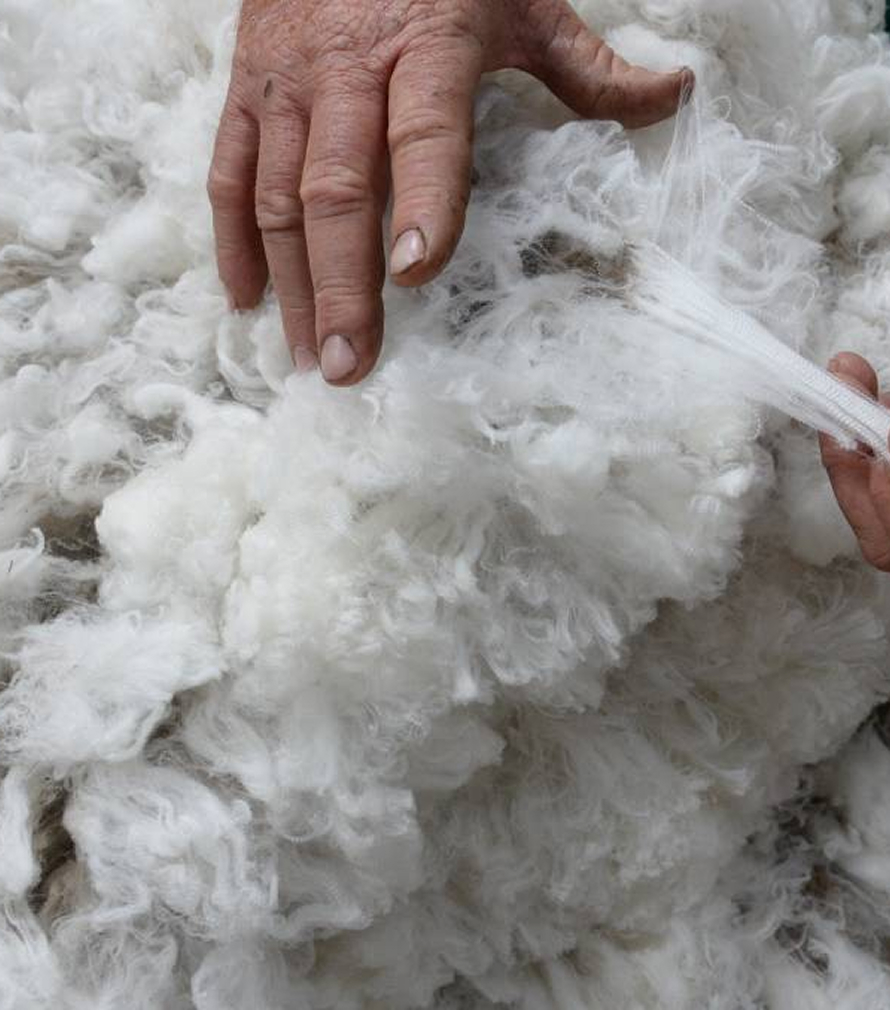
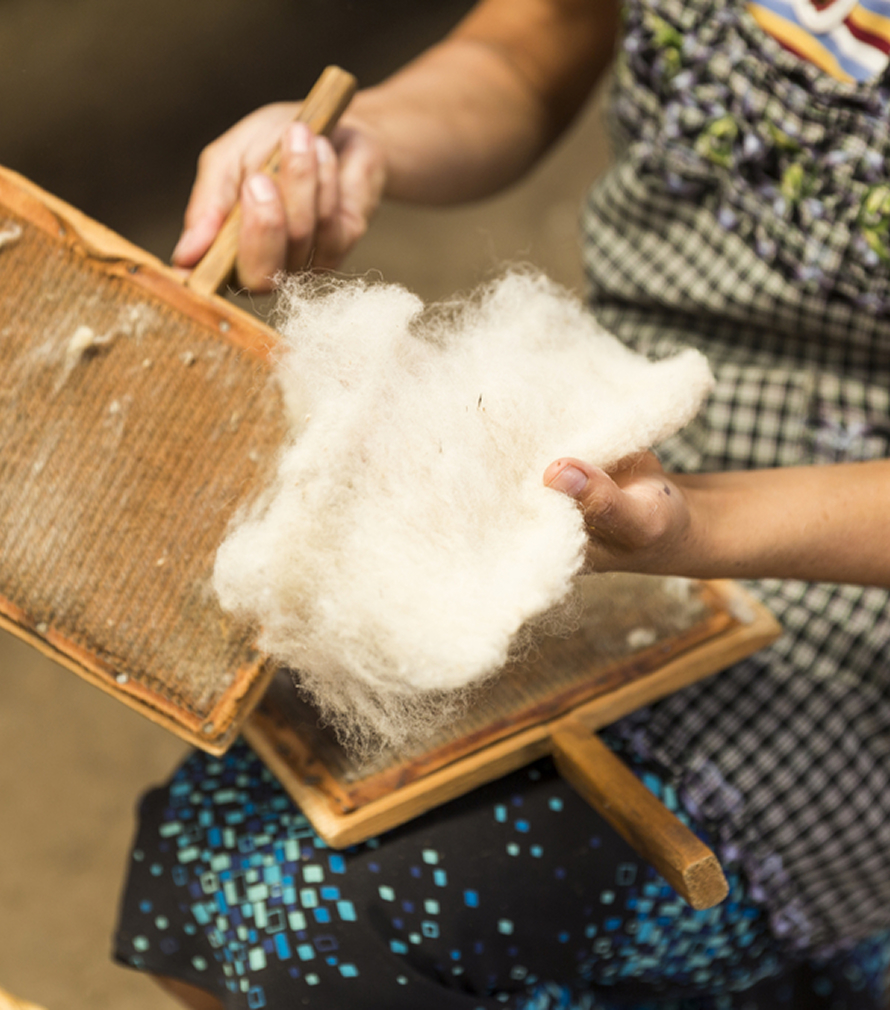
3. Carding

In this stage, the cleaned fibers are gently teased apart using traditional wooden tools. Carding aligns the fibers in the same direction, preparing them for spinning and ensuring the resulting yarn is even and strong. This process preserves the fiber’s natural softness while improving its durability. It forms the essential base for creating a flawless, high-quality weave.

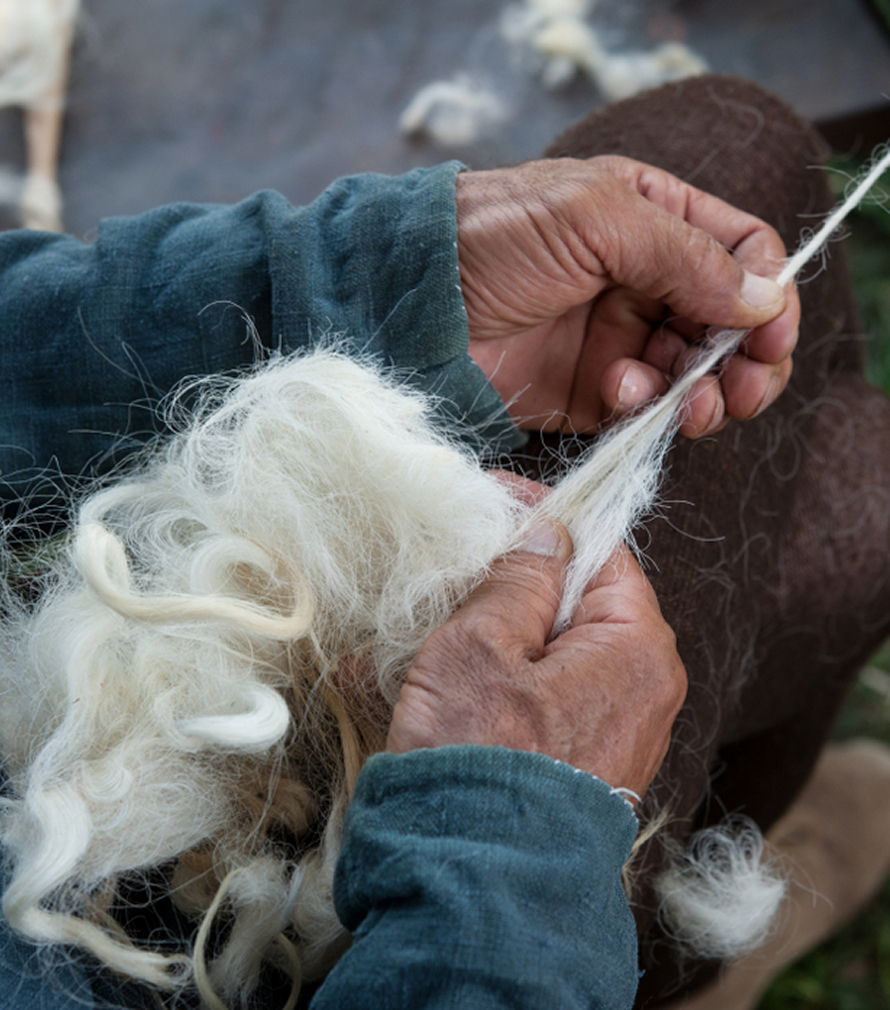
4. Spinning

The carded wool is spun into fine yarn using a wooden spindle or charkha. Master spinners work with a practiced rhythm, creating a thread so fine it’s almost weightless, yet strong enough to withstand intricate weaving. This delicate balance of fineness and strength is what gives the shawl its signature drape. Every twist of the thread carries the touch and precision of generations of craftsmanship.

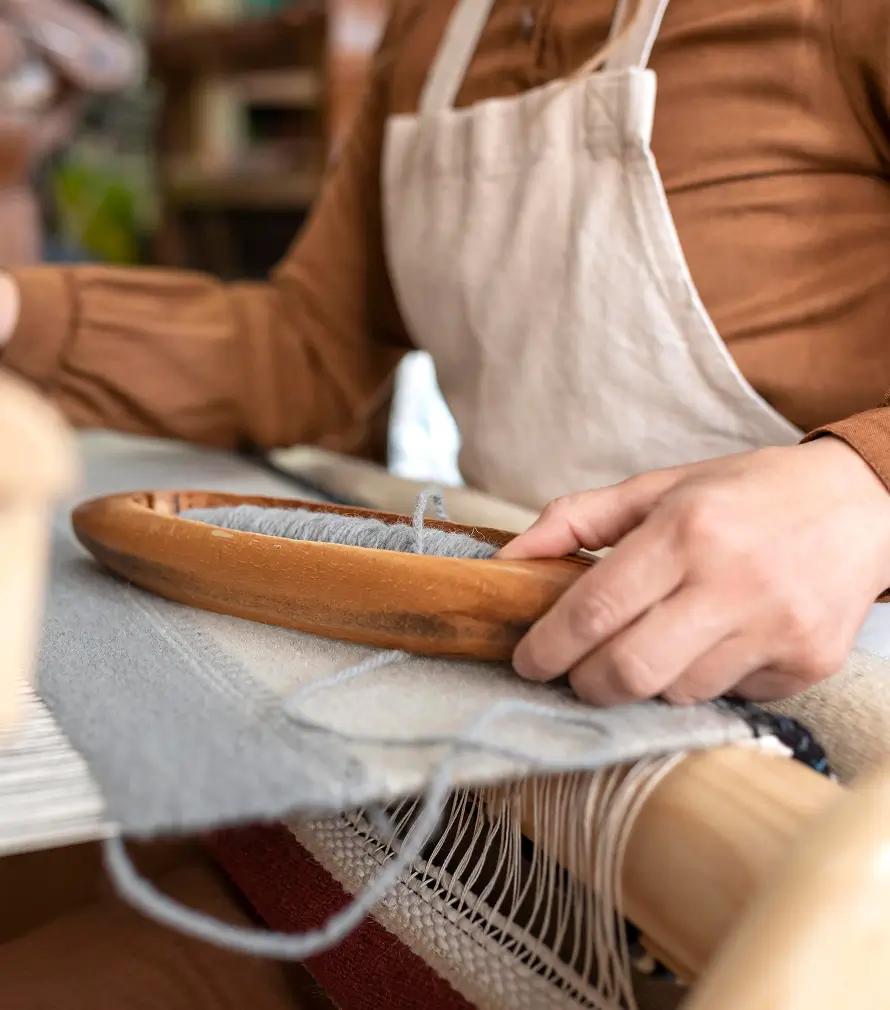
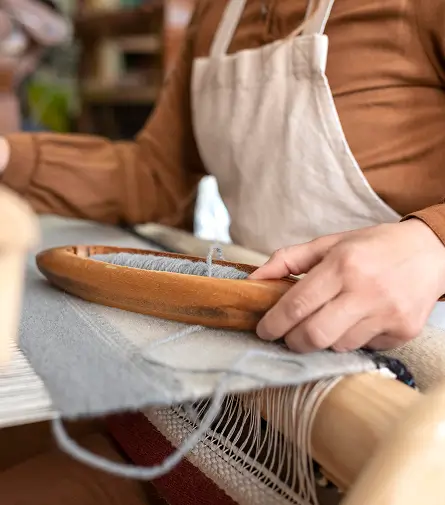
5. Weaving

On the loom, the yarn is transformed into fabric by skilled artisans who bring each design to life, thread by thread. Weaving is where artistry meets patience, producing a textile of timeless beauty. Every woven piece is a testament to the dedication and soul of its maker.

From fabric to craft, each piece is carefully shaped, detailed, and finished by skilled artisans — turning fine fabric into timeless works of art.

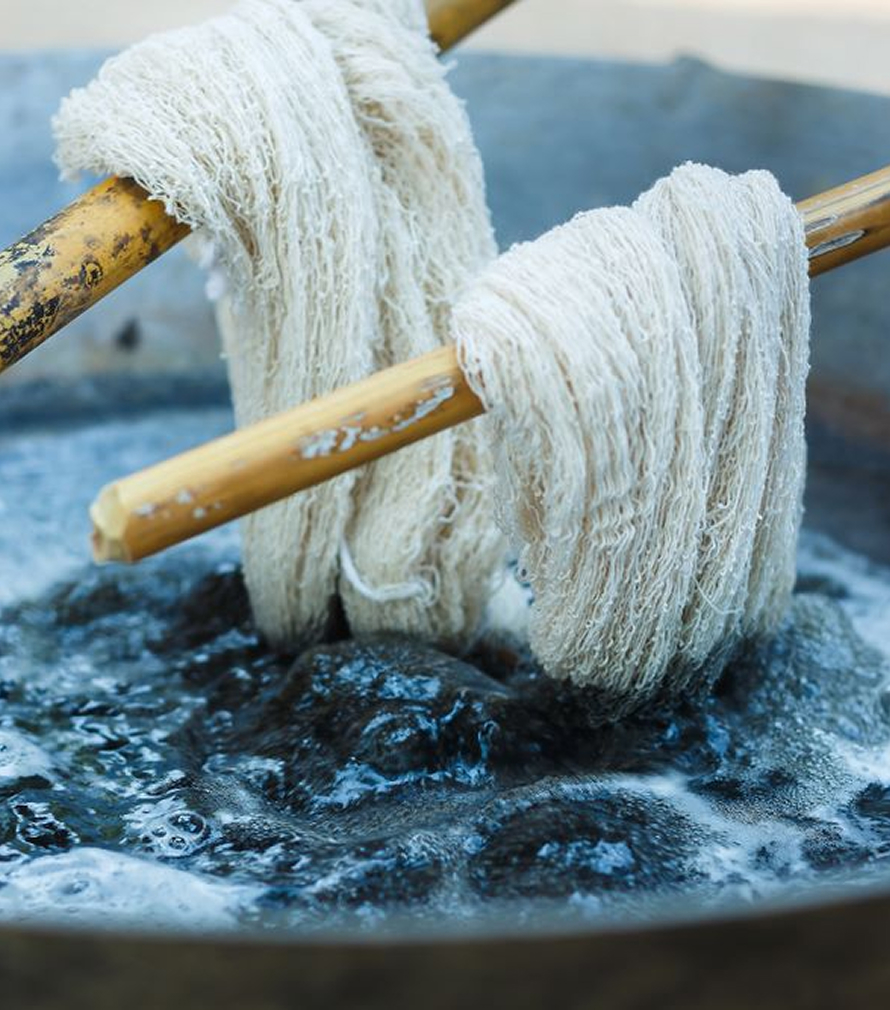
1. Dyeing

The journey begins with handpicked, pure Pashmina yarns or woven shawls, which are dyed using age-old techniques. Natural and eco-friendly pigments are carefully chosen to preserve the softness of the fibre while achieving hues that are deep, radiant, and enduring. 

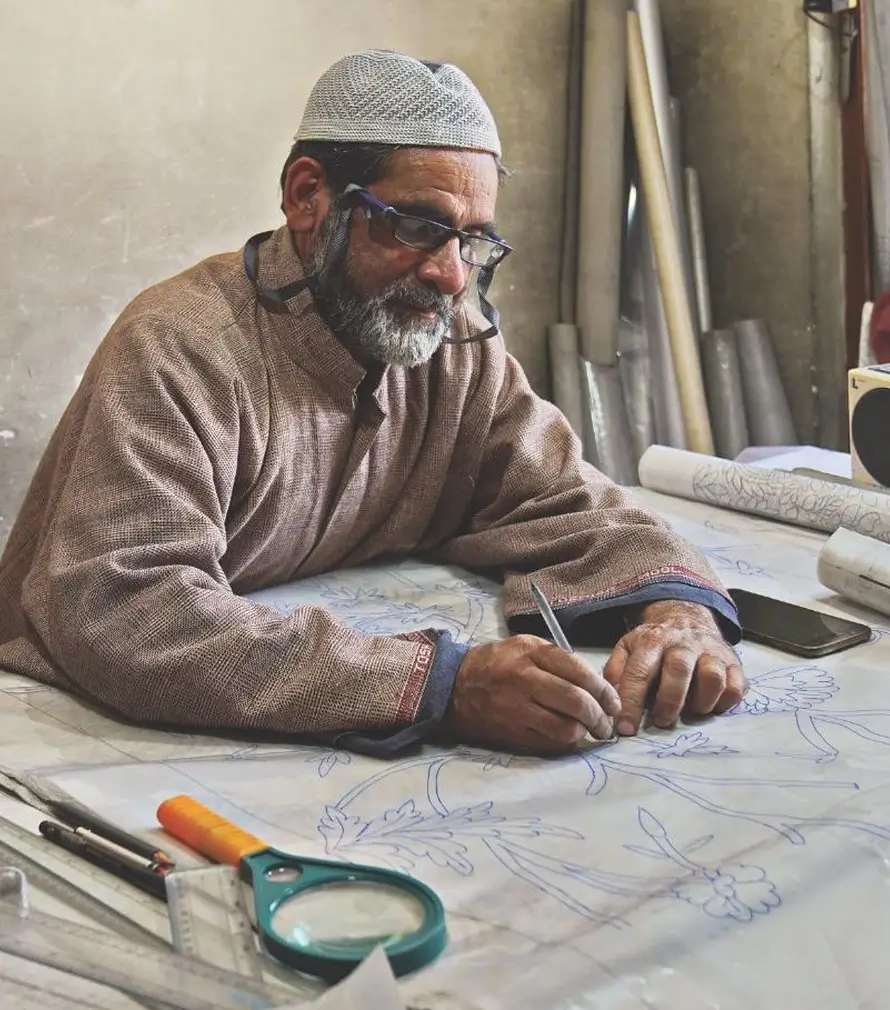
2. Tracing design

A Naqash carefully traces designs onto the shawl as the first step in creating intricate patterns. Using chalk or fine pencils, the artisan marks outlines directly on the fabric, providing a precise guide for subsequent hand painting or embroidery, ensuring the final pattern is accurate and well-aligned.

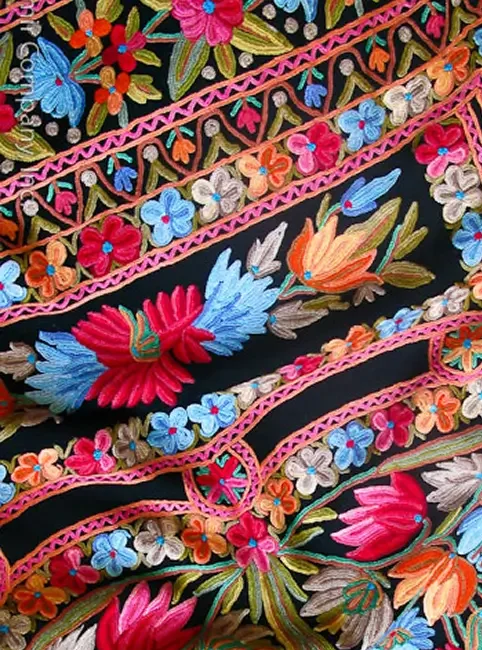
3. Embroidery

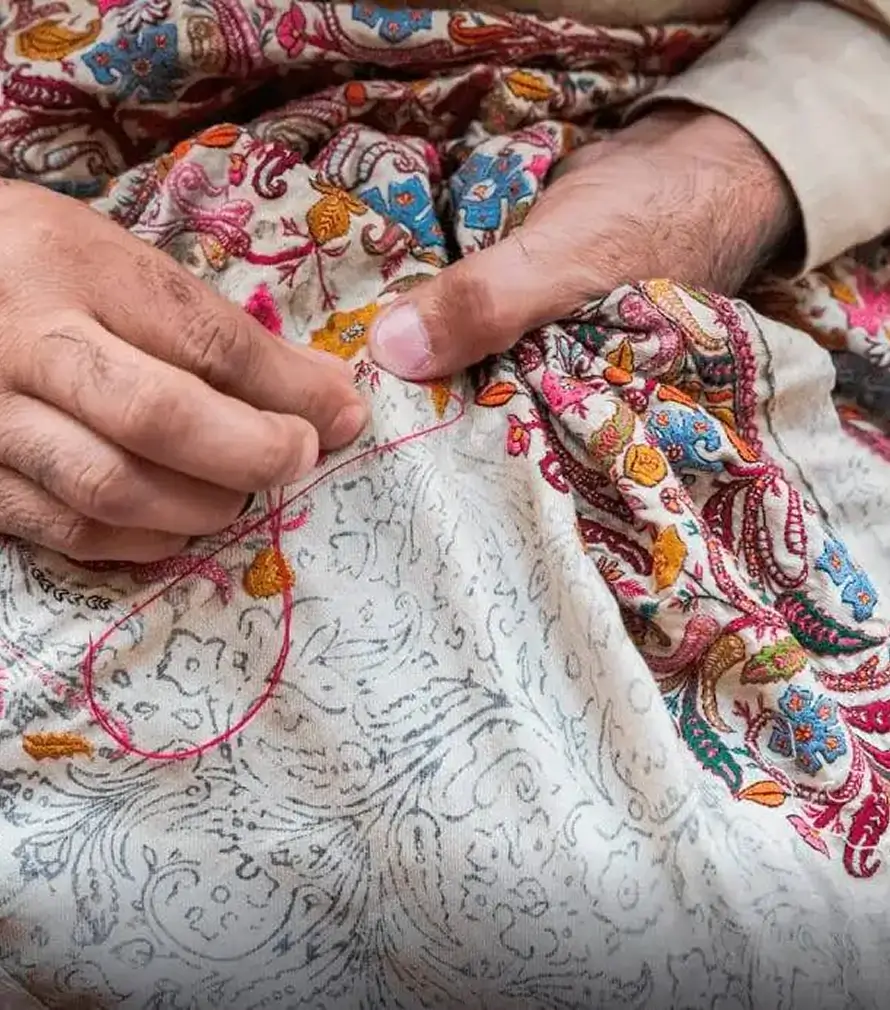
The embroidery is where the shawl transforms from fabric into art. Master artisans spend months, sometimes years, hand-stitching intricate patterns inspired by Persian, Mughal, and Kashmiri motifs. Each stitch is deliberate, each motif symbolic — from paisleys representing life’s cycle to floral vines evoking the valley’s gardens in spring.

4. Finishing

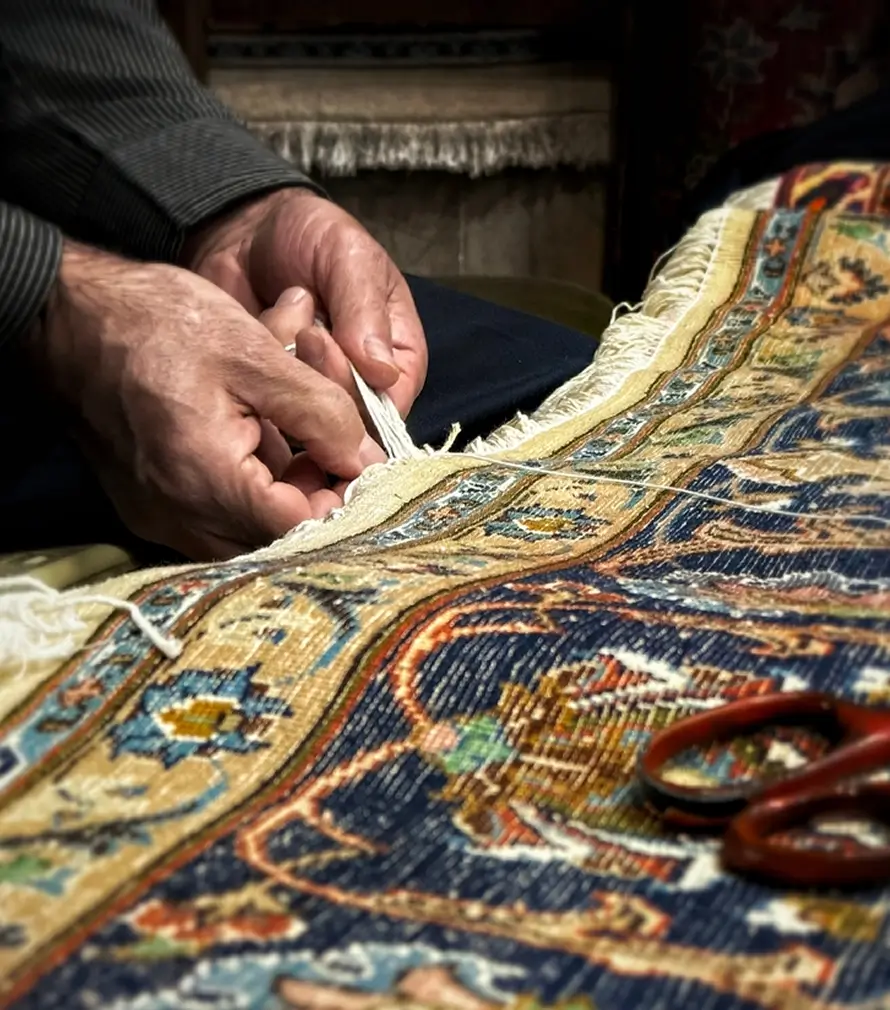
Once woven and embroidered, the shawl undergoes delicate finishing. Loose threads are trimmed, the fabric is brushed to restore its softness, and fringes are hand-tied with care. This stage ensures the shawl drapes effortlessly, and is free from any shortcomings.

5. Washing & drying

Before a shawl reaches its owner, it is gently hand-washed in pure water to remove natural oils and weaving residues. This careful process preserves the Pashmina’s delicate fibres, enhancing its softness and drape. Finally, it is air-dried under the open sky, imbued with the freshness of the valley it was born in.

6. Certification

Every finished shawl is examined by master craftsmen before receiving its GI (Geographical Indication) certification — an assurance that it is an authentic Kashmiri creation, made entirely by hand from pure Pashmina. This seal safeguards the legacy of the artisans and the trust of the wearer.

Fiber To fabric

Each handcrafted shawl goes through a meticulous fiber-to-fabric process — from sourcing fine wool to shorting, Carding, spinning, and weaving, every step reflects skilled artistry and tradition.

1. Combing the Goats

The process begins high in the pristine Himalayan ranges, where the rare Changthangi goats develop an exceptionally fine undercoat to endure the harsh winter cold. This soft, precious pashmina fiber — prized for its warmth, lightness, and softness — is collected with utmost care by gently combing, never shearing, to protect the goats’ well-being and preserve the fiber’s unmatched purity and quality.

2. Sorting & Dehairing

Once collected, the fibers are carefully sorted by hand, with skilled artisans patiently separating the finest, most delicate strands from the coarser ones. The dehairing process, carried out with meticulous precision, gently removes the outer guard hair, leaving behind only the cloud-like softness treasured for crafting exquisite and luxurious shawls. 

3. Carding

In this stage, the cleaned fibers are gently teased apart using traditional wooden tools. Carding aligns the fibers in the same direction, preparing them for spinning and ensuring the resulting yarn is even and strong. This process preserves the fiber’s natural softness while improving its durability. It forms the essential base for creating a flawless, high-quality weave.

4. Spinning

The carded wool is spun into fine yarn using a wooden spindle or charkha. Master spinners work with a practiced rhythm, creating a thread so fine it’s almost weightless, yet strong enough to withstand intricate weaving. This delicate balance of fineness and strength is what gives the shawl its signature drape. Every twist of the thread carries the touch and precision of generations of craftsmanship.

5. Weaving

On the loom, the yarn is transformed into fabric by skilled artisans who bring each design to life, thread by thread. Weaving is where artistry meets patience, producing a textile of timeless beauty. Every woven piece is a testament to the dedication and soul of its maker.

Fabric To Masterpiece

From fabric to craft, each piece is carefully shaped, detailed, and finished by skilled artisans — turning fine fabric into timeless works of art.

1. Dyeing

The journey begins with handpicked, pure Pashmina yarns or woven shawls, which are dyed using age-old techniques. Natural and eco-friendly pigments are carefully chosen to preserve the softness of the fibre while achieving hues that are deep, radiant, and enduring. 

2. Tracing design

A Naqash carefully traces designs onto the shawl as the first step in creating intricate patterns. Using chalk or fine pencils, the artisan marks outlines directly on the fabric, providing a precise guide for subsequent hand painting or embroidery, ensuring the final pattern is accurate and well-aligned.

3. Embroidery

The embroidery is where the shawl transforms from fabric into art. Master artisans spend months, sometimes years, hand-stitching intricate patterns inspired by Persian, Mughal, and Kashmiri motifs. Each stitch is deliberate, each motif symbolic — from paisleys representing life’s cycle to floral vines evoking the valley’s gardens in spring.

4. Finishing

Once woven and embroidered, the shawl undergoes delicate finishing. Loose threads are trimmed, the fabric is brushed to restore its softness, and fringes are hand-tied with care. This stage ensures the shawl drapes effortlessly, and is free from any shortcomings.

5. Washing & drying

Before a shawl reaches its owner, it is gently hand-washed in pure water to remove natural oils and weaving residues. This careful process preserves the Pashmina’s delicate fibres, enhancing its softness and drape. Finally, it is air-dried under the open sky, imbued with the freshness of the valley it was born in.

6. Certification

Every finished shawl is examined by master craftsmen before receiving its GI (Geographical Indication) certification — an assurance that it is an authentic Kashmiri creation, made entirely by hand from pure Pashmina. This seal safeguards the legacy of the artisans and the trust of the wearer.

Fiber To fabric

1. Selection of Raw Material

 Handicraft textiles offer a blend of artistry, quality, and eco-consciousness, making them an excellent choice for those seeking style, longevity, and environmental responsibility. Here are the top advantages of choosinghandicraft Handicraft textiles offer a blend of artistry, quality, and eco-consciousness, making them an excellent choice textiles offer a blend of artistry, quality, and eco-consciousness, making them an excellent choice

2. Carding

Handicraft textiles offer a blend of artistry, quality, and eco-consciousness, making them an excellent choice for those seeking style, longevity, and environmental responsibility. Here are the top advantages of choosing handicraft Handicraft textiles offer a blend of artistry, quality, and eco-consciousness, making them an excellent choice textiles offer a blend of artistry, quality, and eco-consciousness, making them an excellent choice

3. Spooling

 Handicraft textiles offer a blend of artistry, quality, and eco-consciousness, making them an excellent choice for those seeking style, longevity, and environmental responsibility. Here are the top advantages of choosinghandicraft Handicraft textiles offer a blend of artistry, quality, and eco-consciousness, making them an excellent choice textiles offer a blend of artistry, quality, and eco-consciousness, making them an excellent choice

4. Spinning in Charkha

Handicraft textiles offer a blend of artistry, quality, and eco-consciousness, making them an excellent choice for those seeking style, longevity, and environmental responsibility. Here are the top advantages of choosing handicraft Handicraft textiles offer a blend of artistry, quality, and eco-consciousness, making them an excellent choice textiles offer a blend of artistry, quality, and eco-consciousness, making them an excellent choice

5. Dyeing


Handicraft textiles offer a blend of artistry, quality, and eco-consciousness, making them an excellent choice for those seeking style, longevity, and environmental responsibility. Here are the top advantages of choosinghandicraft Handicraft textiles offer a blend of artistry, quality, and eco-consciousness, making them an excellent choice textiles offer a blend of artistry, quality, and eco-consciousness, making them an excellent choice

Fabric To Masterpiece

1. Weaving

 Handicraft textiles offer a blend of artistry, quality, and eco-consciousness, making them an excellent choice for those seeking style, longevity, and environmental responsibility. Here are the top advantages of choosinghandicraft Handicraft textiles offer a blend of artistry, quality, and eco-consciousness, making them an excellent choice textiles offer a blend of artistry, quality, and eco-consciousness, making them an excellent choice

2. Tracing design

Handicraft textiles offer a blend of artistry, quality, and eco-consciousness, making them an excellent choice for those seeking style, longevity, and environmental responsibility. Here are the top advantages of choosing handicraft Handicraft textiles offer a blend of artistry, quality, and eco-consciousness, making them an excellent choice textiles offer a blend of artistry, quality, and eco-consciousness, making them an excellent choice

3. Embroidery

 Handicraft textiles offer a blend of artistry, quality, and eco-consciousness, making them an excellent choice for those seeking style, longevity, and environmental responsibility. Here are the top advantages of choosinghandicraft Handicraft textiles offer a blend of artistry, quality, and eco-consciousness, making them an excellent choice textiles offer a blend of artistry, quality, and eco-consciousness, making them an excellent choice

4. Finishing

Handicraft textiles offer a blend of artistry, quality, and eco-consciousness, making them an excellent choice for those seeking style, longevity, and environmental responsibility. Here are the top advantages of choosing handicraft Handicraft textiles offer a blend of artistry, quality, and eco-consciousness, making them an excellent choice textiles offer a blend of artistry, quality, and eco-consciousness, making them an excellent choice

5. Washing

 Handicraft textiles offer a blend of artistry, quality, and eco-consciousness, making them an excellent choice for those seeking style, longevity, and environmental responsibility. Here are the top advantages of choosinghandicraft Handicraft textiles offer a blend of artistry, quality, and eco-consciousness, making them an excellent choice textiles offer a blend of artistry, quality, and eco-consciousness, making them an excellent choice

Experience The Legacy Of Craftsmanship

Access The Collection Of Finest Handmade Shawls — Woven With Devotion, Designed Beyond Trends And Destined To Become Timeless Companions

Scroll to Top

Thank you for reaching out.

We will connect with you soon.

Appointment Request Received

Expect to hear from us soon.